Self-Shading Facade Optimization
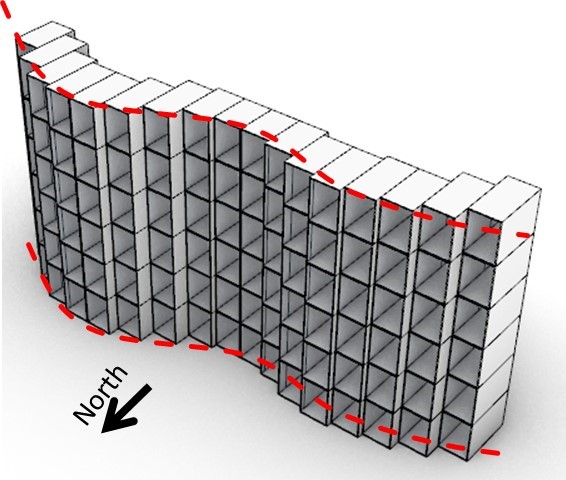
Individual assignment for BPS5112 at the National University of Singapore. This study optimizes the energy performance of a curved-facade office building in Singapore by maximizing self-shading through two simulation-driven approaches: irradiance-based optimization and image-processing-based optimization, both powered by Radiance and coupled with differential evolution and support vector regression.
Download full report (PDF) → · View code on GitHub →
Background
Solar radiation is a major driver of cooling loads in tropical buildings. Self-shading envelopes — inclined or stepped facades that use building geometry to block direct sun — can significantly reduce envelope thermal transfer.
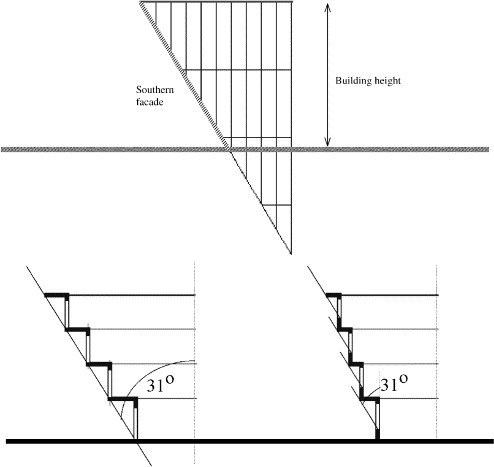
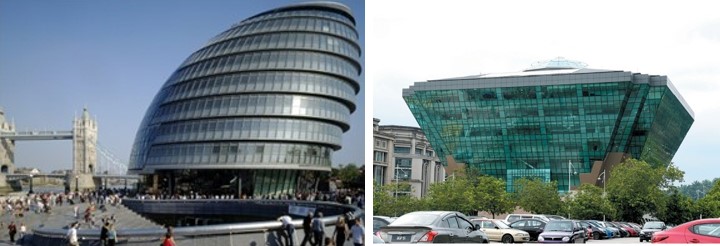
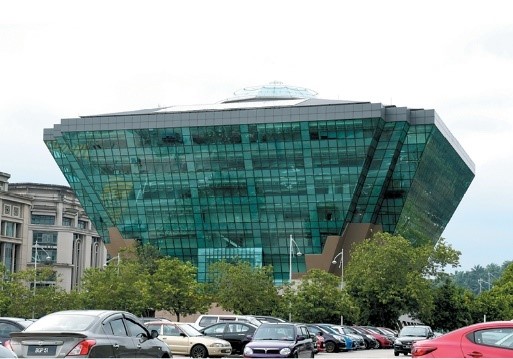
Well-known precedents include London City Hall and the Diamond Building in Malaysia.
Case Study
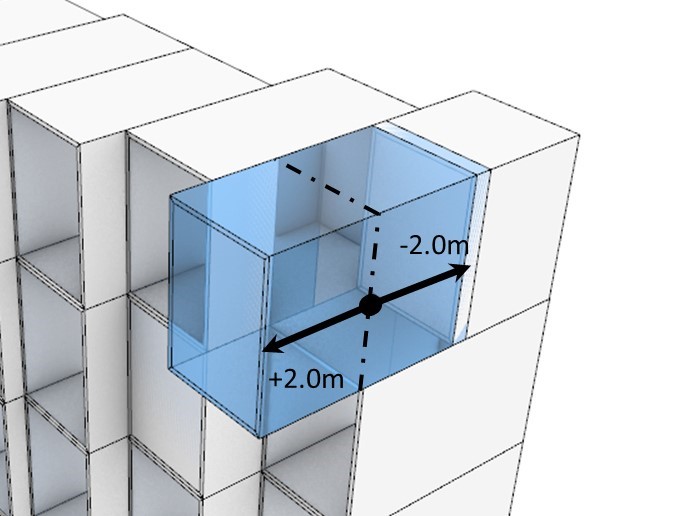
The base model is a north-facing curved facade with 102 spaces (17 bays × 6 rows), each 2.5 m wide and 3.5 m high. During optimization, every exterior wall can shift ±2.0 m perpendicular to the facade surface.
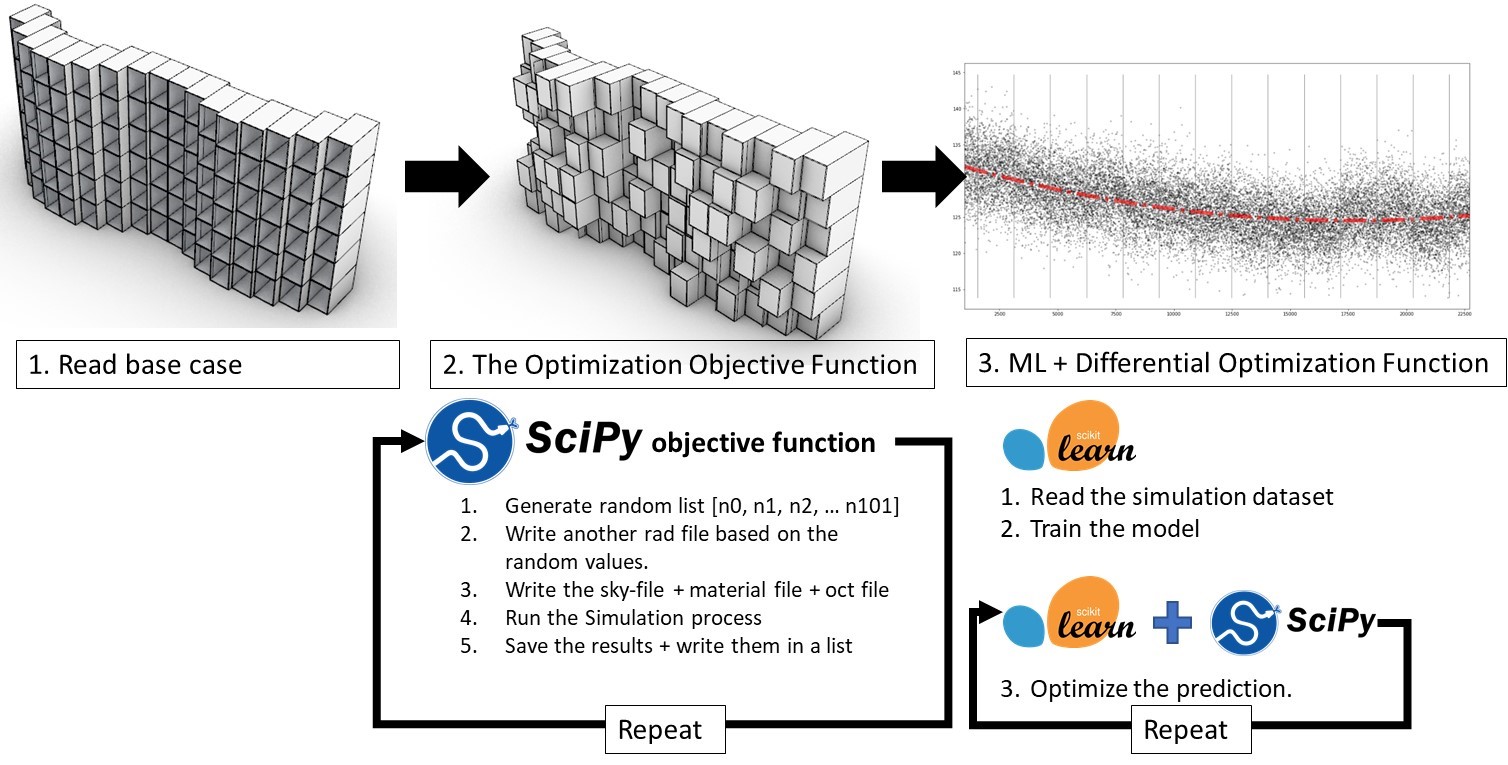
The model was initially built in IES-VE, then exported to Radiance (.rad) and driven by a custom Python pipeline that reads, parametrizes, simulates, and collects results at each iteration.
Two Optimization Approaches
Both approaches share the same workflow but differ in how facade performance is measured.
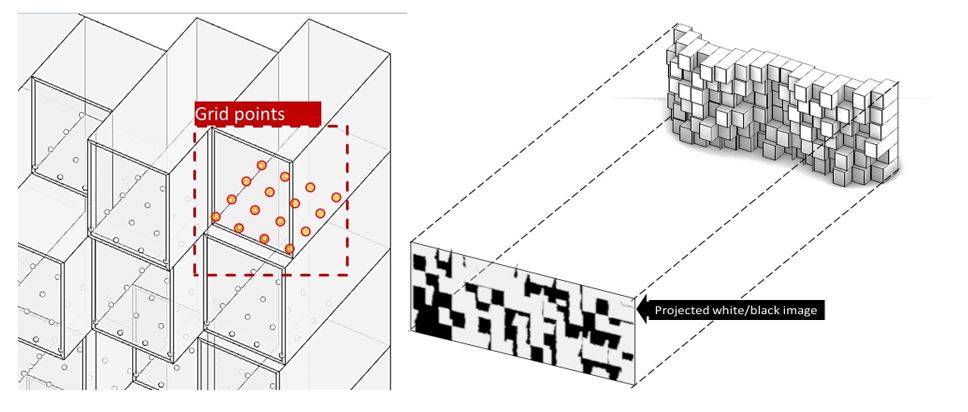
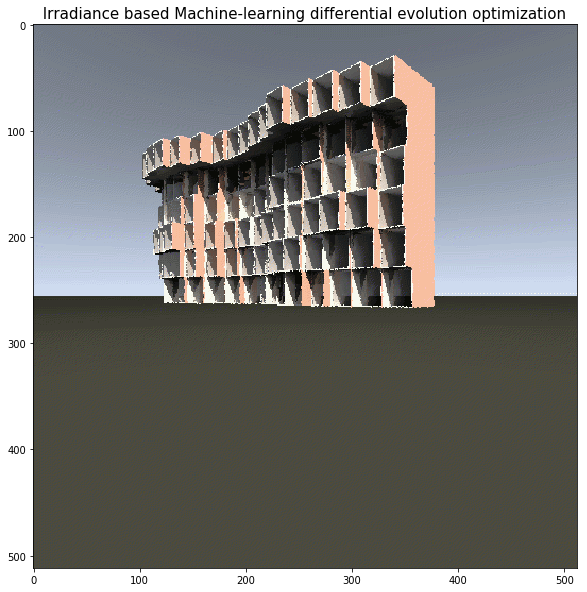
Irradiance-based: Lux values are sampled on a grid of test points inside each space and averaged across the facade.
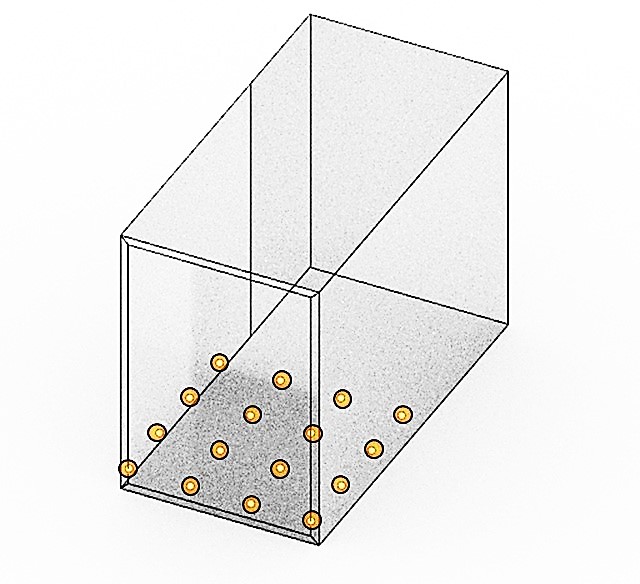
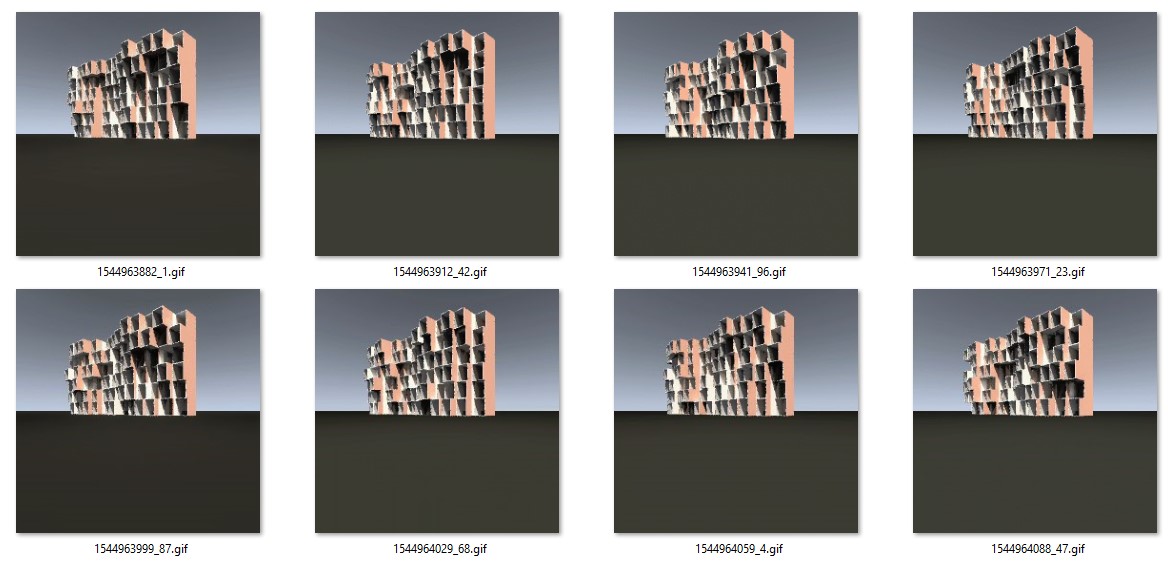
Image-processing-based: An isometric elevation render is converted to black/white with OpenCV; the shaded-to-exposed pixel ratio is then maximized.

Irradiance-Based Results
Roughly 22,719 random samples were generated. Due to noisy convergence, Radiance ambient parameters were adjusted mid-run. A hybrid differential-evolution + SVM regression model was then trained on the full dataset.
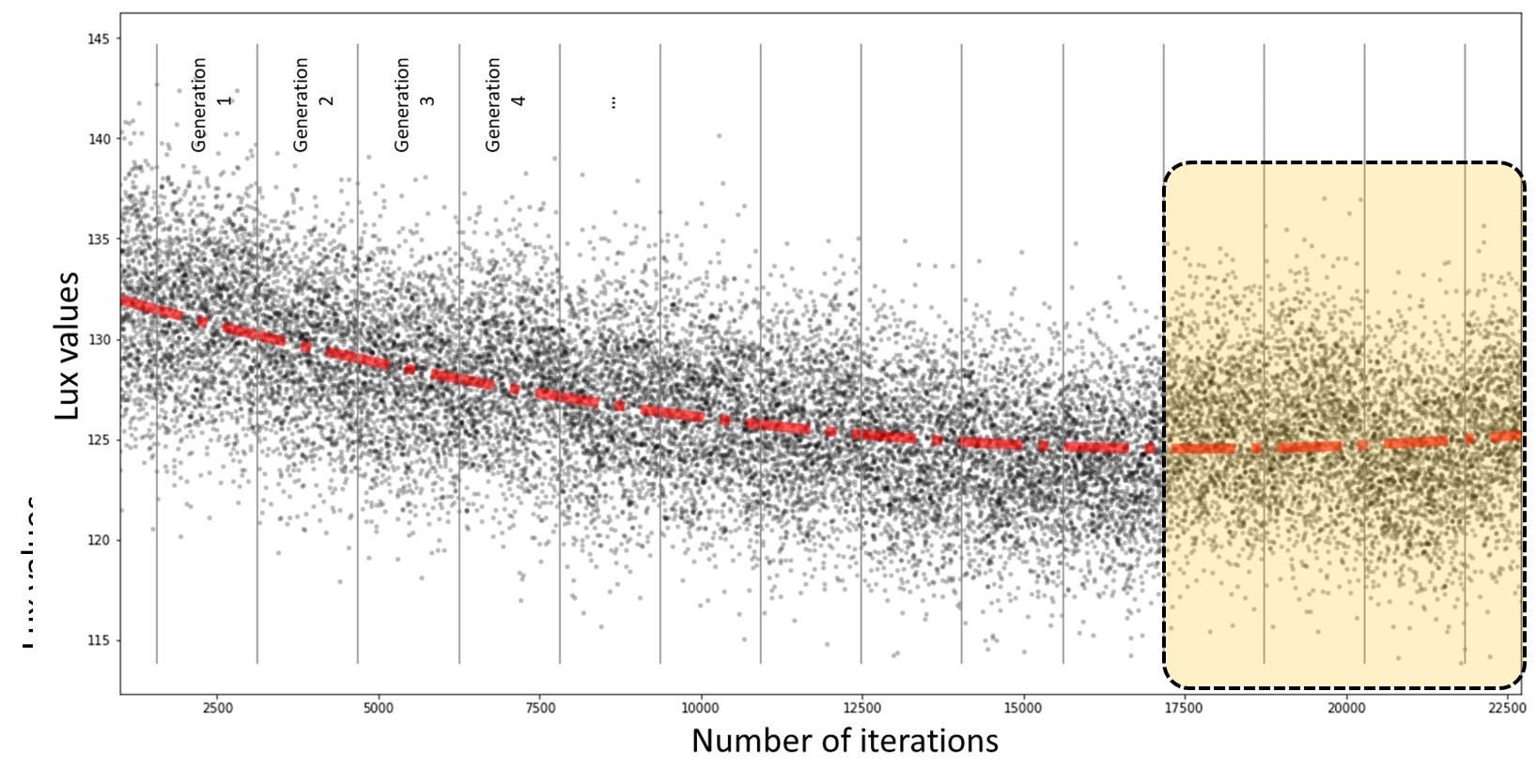
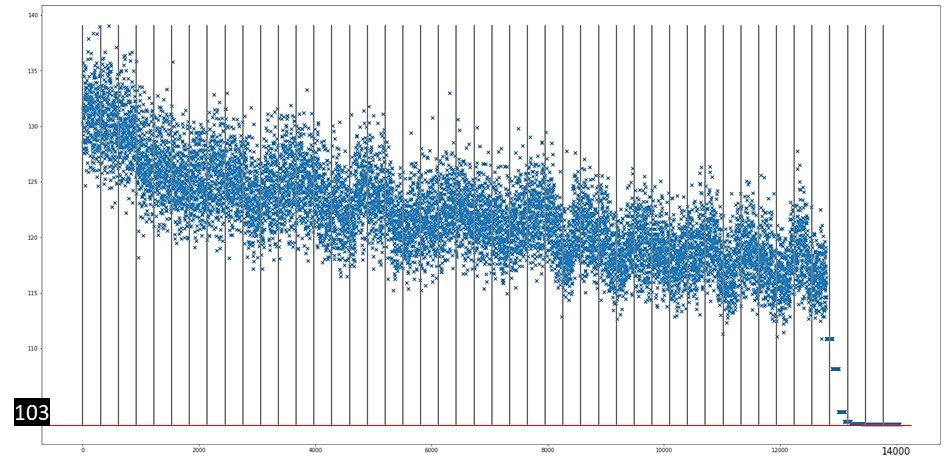
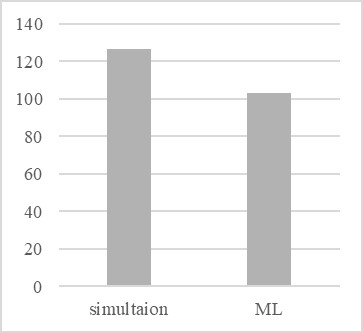
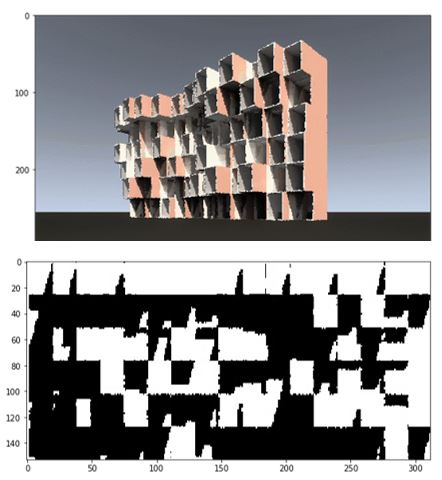
Image-Processing Results
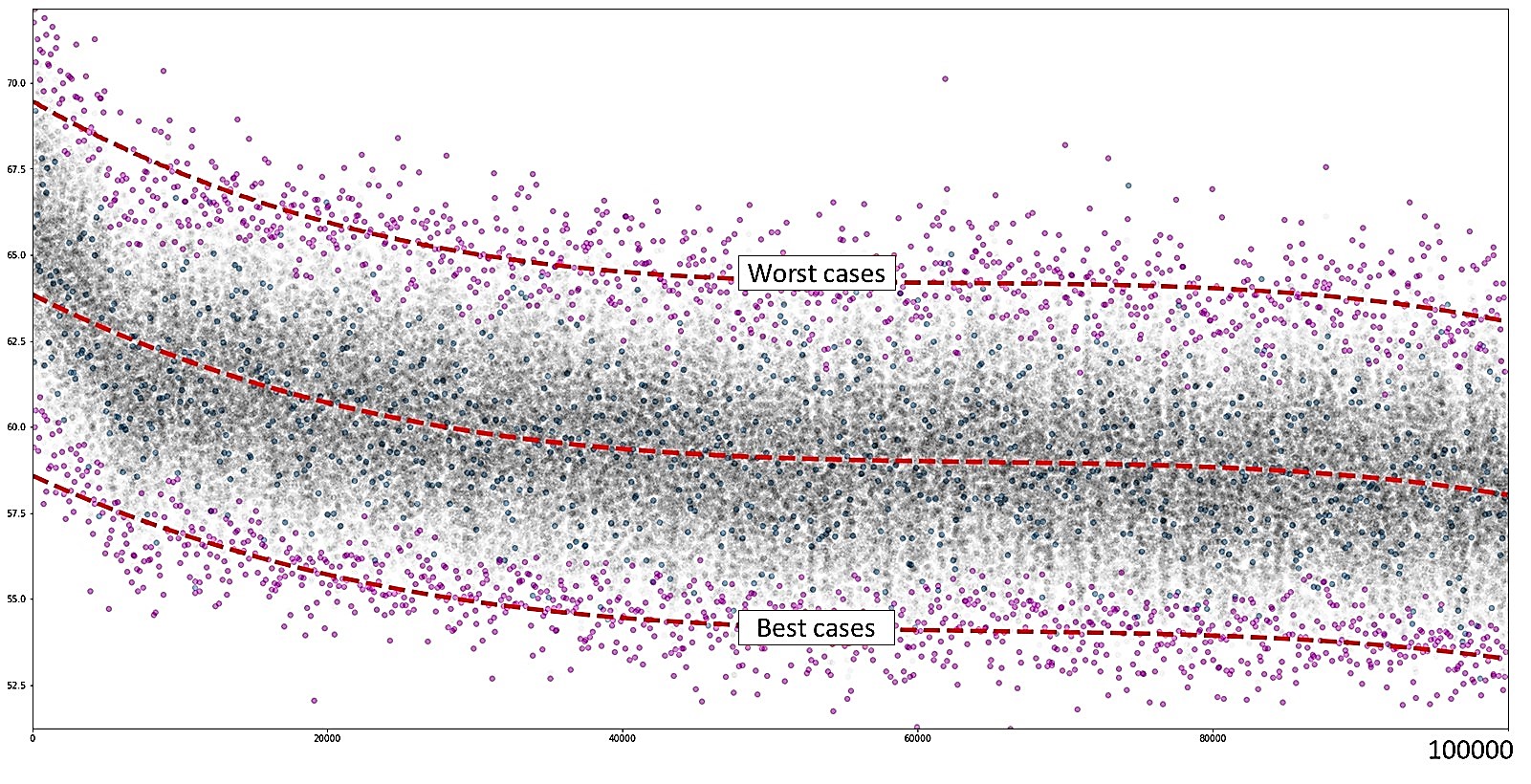
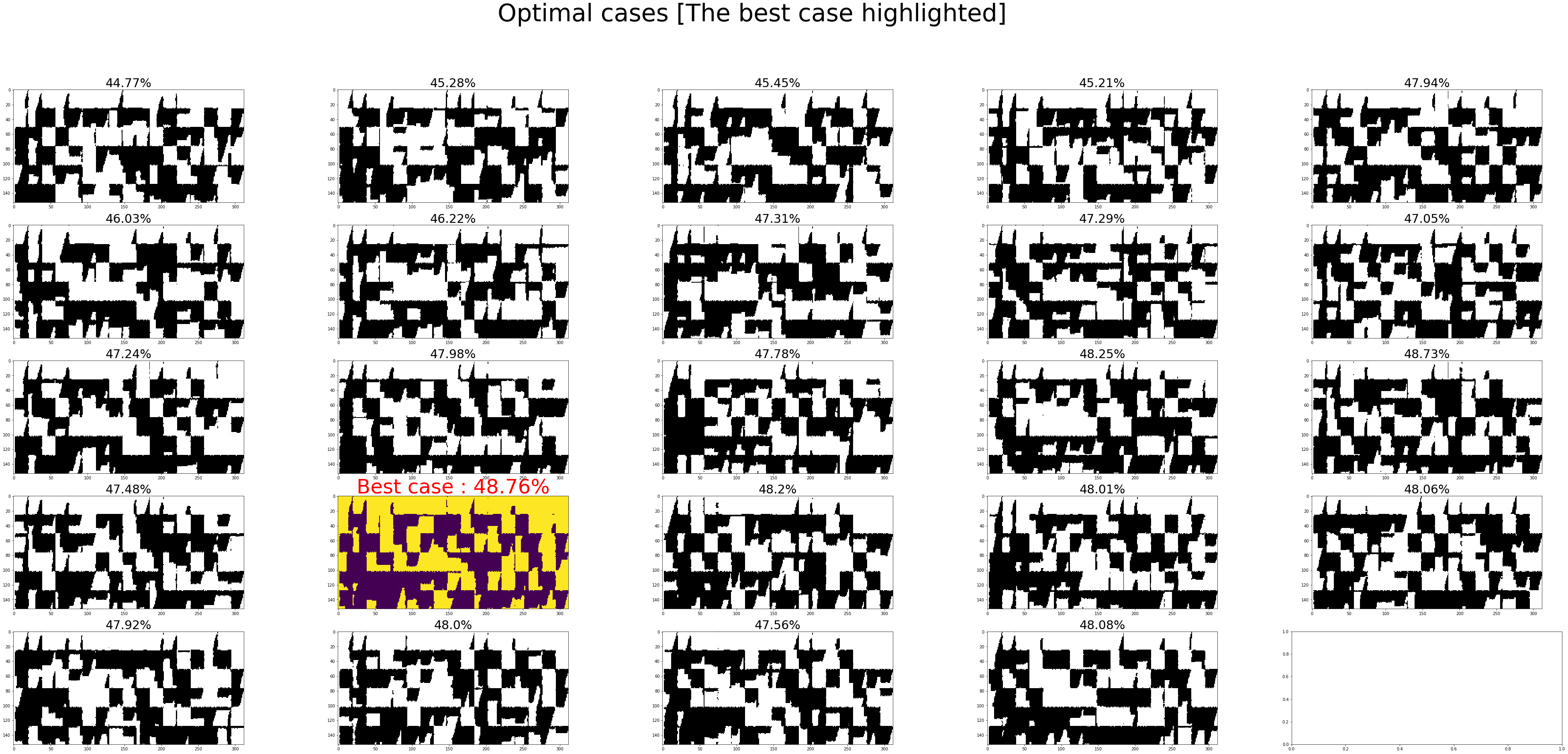
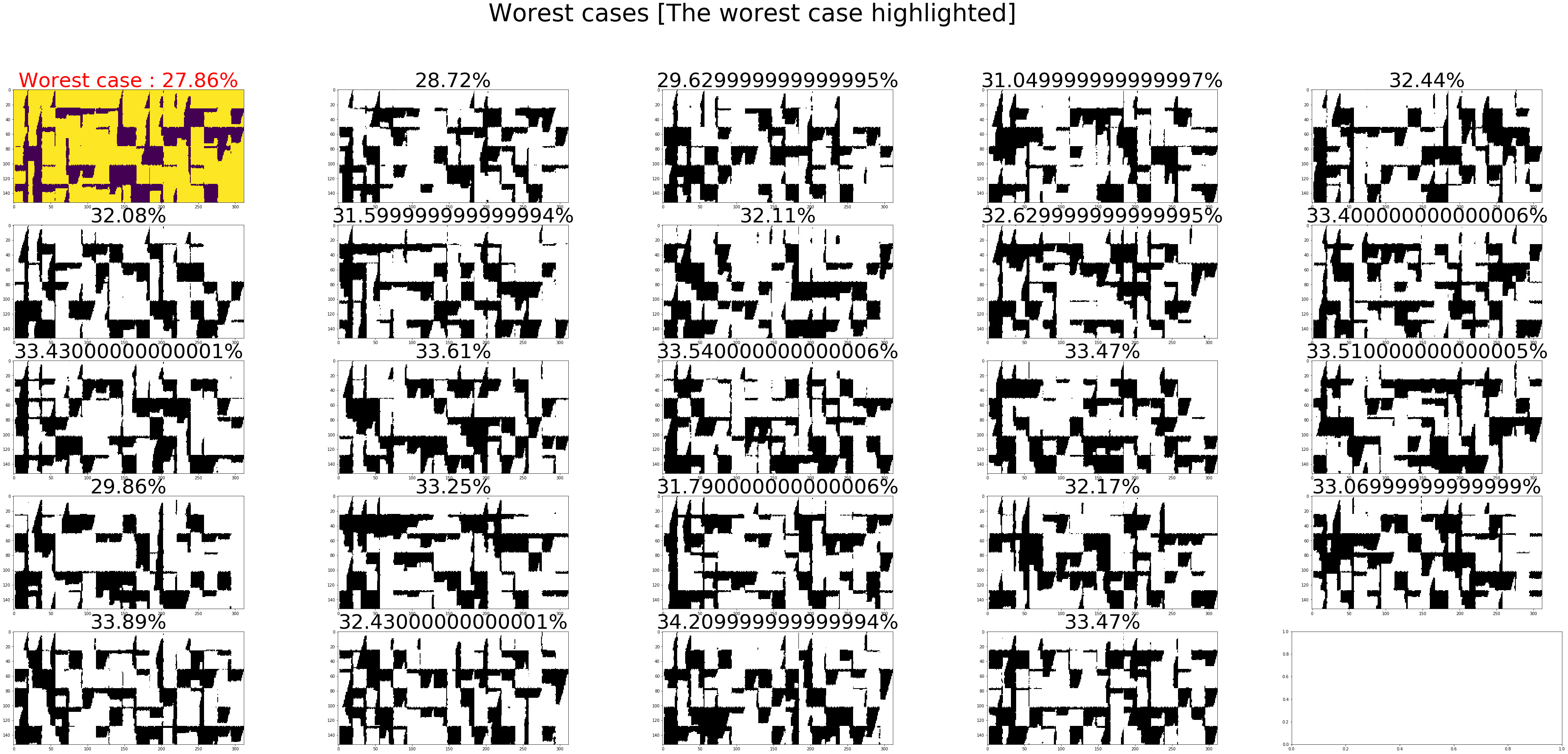
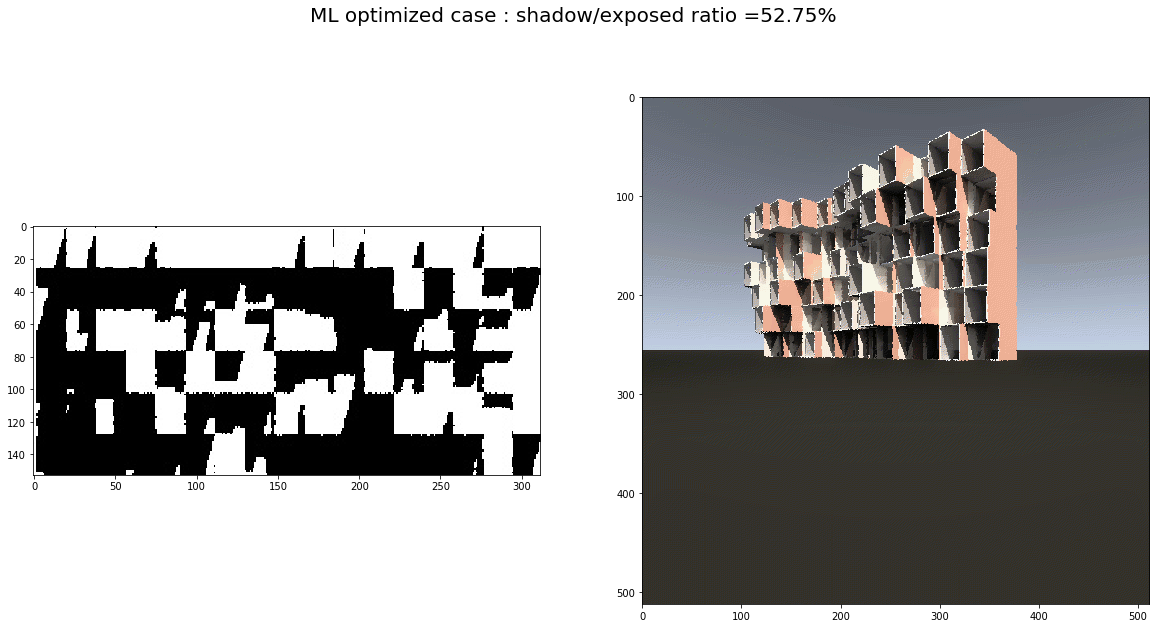
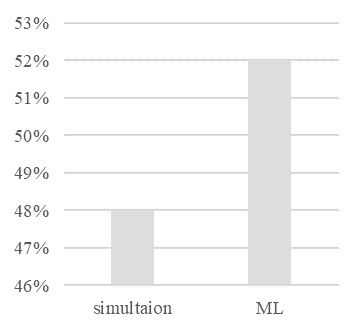
More than 100,000 iterations were evaluated. Best and worst simulation cases reached 48.7% and 27.8% shaded area respectively. Machine-learning-guided optimization improved the outcome further.

Machine Learning
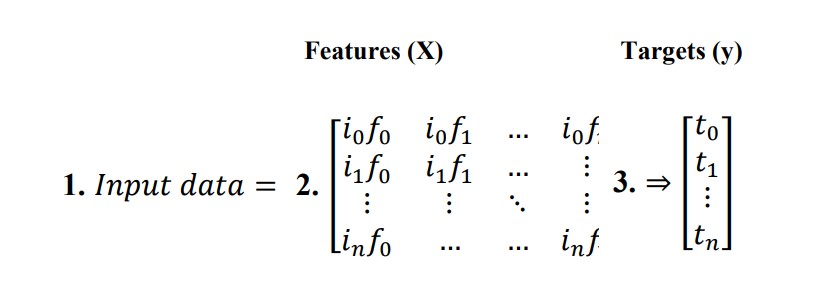
Support vector regression (scikit-learn) was used to smooth noisy simulation outputs and guide differential evolution toward a global optimum.
Summary
| Approach | Best simulation | Best ML result |
|---|---|---|
| Irradiance-based | 126.4 lux | 103.0 lux |
| Image-processing | 48.76% shaded | 52.75% shaded |
The image-processing route proved faster and more resource-efficient, raising the shaded fraction from ~3% in the initial case to over 52% after optimization. Future work could couple these facade geometries with full cooling-load simulation.